
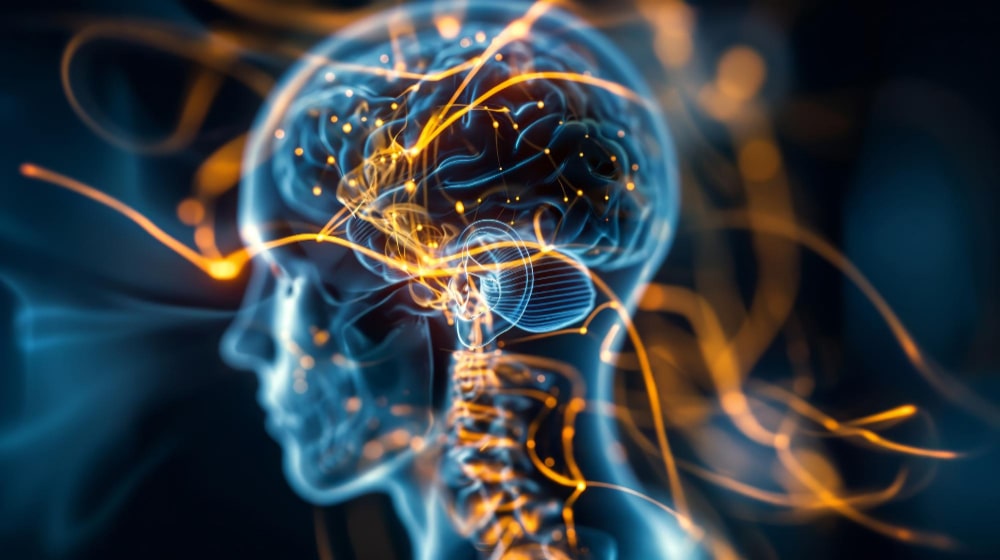
Tinnitus can be objective and thus is caused by sounds generated in the body that reach the ear through conduction via body tissue, but more commonly subjective tinnitus is the symptom occurring without any physical sound reaching the ear. Such tinnitus is a phantom sensation. Abnormal neural activity is generated in the ear, the auditory nerve, or the central nervous system evoking the symptom. Subjective tinnitus may occur in connection with hearing loss, presbycusis, deafness, after exposure to loud noise, or after ototoxic drug administration. Though frequently no cause can be found. At EViasis medical our Neuro-otology specialist keeps up to date with all the new research findings and therapies for ultimate patient management.
More seldom diseases that entail tinnitus as one of the symptoms are Ménière's disease and vestibular Schwannoma. Patients with severe tinnitus may have sound distortion or may also show sound intolerance as in hyperacusis.
Where does the sound come from?
The anatomical location of chronic subjective tinnitus is rarely in the ear but more often in the auditory nervous system. Indications have been documented that the pathophysiology of unilateral and bilateral tinnitus is different. Significant evidence has been portrayed that neural plasticity plays a central role in the development of many forms of chronic subjective tinnitus.
Neural plasticity and its expression may alter the equilibrium between excitation and inhibition in the nervous system, induce hyperactivity, evoke reorganization of specific parts of the nervous system or redirection of information to parts of the nervous system not usually involved in processing of sounds.
Due to the complexity of the different types of subjective tinnitus, it is futile to search for a single cure or therapy. Moreover, testing for new treatments is restricted by the fact that it is not possible to distinguish between different forms of tinnitus for which different therapies may be effective.
Tinnitus may influence individuals differently. It might just be a minor nuisance, or it may inflict suffering by causing anxiety, insomnia or disturbed sleep, and psychological manifestations such as depression or phonophobia.
What is Subjective chronic tinnitus?
This form of tinnitus belongs to a group of phantom sensations like central neuropathic pain. These are not disorders but symptoms of different types of abnormalities in which expression of neural plasticity is implicated.
Other manifestations accompanying tinnitus
Frequently, severe tinnitus is accompanied by abnormal sound perception and hyperacusis or distortion of sounds. Intolerance of specific sounds with emotional associations are phonophobia and misophonia, whereas hyperacusis is normally unrelated to the type of sound. Affective disorders such as depression and phonophobia may also accompany severe tinnitus and thereby tinnitus can result in suicide.
A single name, i.e. tinnitus, for all these different disorders restricts both understanding of the pathophysiology of tinnitus and the treatment because it insinuates that it is possible to locate the aetiology of tinnitus and the treatment for it.
Which changes in the function of the central nervous system cause tinnitus?
The pathophysiology that has been encountered in the research shows altered equilibrium between excitation and inhibition, realignment of neuronal networks, changes in tonotopic maps, and redirection of information.
The future for patients with tinnitus
In the past tinnitus was considered an auditory disorder and because the ear was the main problem area for the patient, the ear became the research priority to uncover the pathophysiology of tinnitus and to glean the appropriate management regime. Latest investigations and field insights have portrayed that tinnitus is far more complex and that the anatomical location of the physiological abnormalities that cause tinnitus is instead the Central Nervous System for most forms of subjective tinnitus.
At EViasis medical our team continues reviewing the literature for best patient management and support protocols.
References
- Jastreboff PJ. Phantom auditory perception (tinnitus): mechanisms of generation and perception. Neurosci Res. 1990 Aug;8(4):221-54.
- Baguley DM. Hyperacusis. J R Soc Med. 2003 Dec;96(12):582-5.
- J.J. Eggermont Tinnitus: neurobiological substrates Drug Discov. Today (2005).
- S. Hebert et al. The sound of stress: blunted cortisol reactivity to psychosocial stress in tinnitus sufferers Neurosci. Lett. (2007).