


What occurs during a Migraine?
Tracking a Migraine
To identify the cause of a migraine, we must backtrack a few days and hours before its onset. Warning signs may be identified, such as:
- fatigue
- mood changes
- repeated yawns
- Sleep Disorders
- motion sickness
- photophobia
- increased thirst
The above signs lead to a specific part of the brain: the hypothalamus.
The hypothalamus controls the systems behind these symptoms such as, hormone equilibrium, circadian rhythm and water intake. The hypothalamus has connections throughout the brain, and the days before a migraine it is more active than usual.
Migraine aura, or sensory disturbances, is another common warning sign, which can appear in the form of transient visual changes, tingling on face or hands or even dysarthria. These symptoms are due to changes in the electrical charges of the cell membrane that affects brain activity and blood flow to the brain. Although we do not know what triggers the change in electrical charge, it is a fact that it spreads through the brain at a rapid rate causing a variety of aura symptoms depending on the area affected.
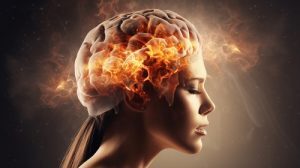
Migraine. Trigeminal Nerve Trigger
The trigeminal nerve plays a key role in the onset of a migraine. The trigeminal nerve transmits information about sensations—such as touch and temperature—from the skin over much of the face, to the skull, to some blood vessels, and to layers of the cerebral cortex. When activated, the trigeminal nerve transmits pain signals, thus causing the debilitating migraine.


